Our Research integrates evolutionary genomics, functional biology, and environmental data to understand how plants adapt and respond to global change. We use whole-genome sequencing, transcriptomics, and genotype–environment analyses to identify the genetic and regulatory basis of adaptive traits. Our work develops predictive frameworks to guide climate-smart restoration, including genomic seed zones that optimize adaptation under future conditions. We also investigate invasion dynamics and adaptive potential in rapidly expanding species to inform biosecurity and management strategies. Together, our research connects genes to ecosystems, translating genomic insights into solutions for resilient and sustainable plant systems.
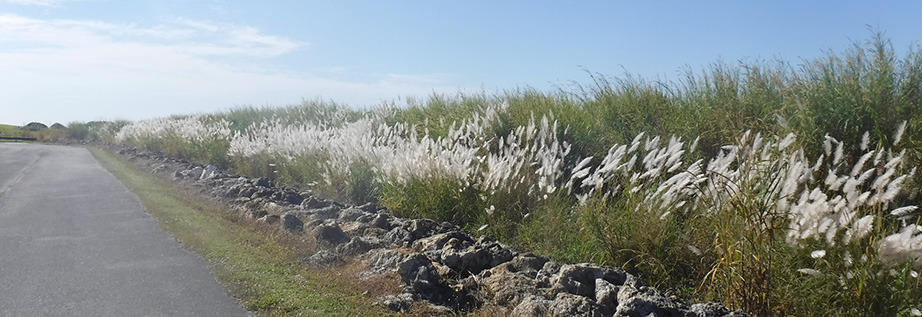
Invasion Genomics and Niche Modeling of Wild Sugarcane
Title: Preventing landscape-level invasion by understanding sources of nonnative weed species hitchhiking via global trade routes: A focus on the Panama Canal Region (USDA Forest Service; Co-PI; 2025 – 2026)
We investigate the invasion biology of Saccharum spontaneum (wild sugarcane) as part of a USDA-funded collaborative project led by Dr. Travis Marsico (PI, Arkansas State University) in partnership with the USDA, the Smithsonian Tropical Research Institute (STRI), and Avalo Inc. We integrate genotype–environment association (GEA) analyses with ecological niche modeling to link adaptive genomic variation with present and future habitat suitability. The genomic analyses identify alleles and loci associated with key environmental gradients, while the niche modeling uses climate, soil, and disturbance variables to project invasion risk under multiple climate change scenarios. A key focus is on source–sink dynamics between Florida and Panama, assessing whether Florida’s invasive populations derive from Panamanian sources, represent multiple introductions, or have mixed origins. This work also includes the development of PloidyFlex, an R package for estimating ploidy levels from 2x to 16x in polyploid species, integrating sequencing-based inference with flow cytometry and cytological validation.
Canalized gene regulatory networks stabilize floral polymorphism and enable modular transgressive expression
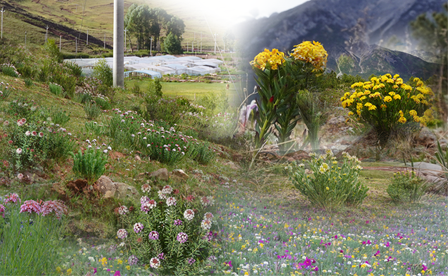
Floral color polymorphisms often persist despite gene flow and environmental variability, suggesting strong underlying regulatory control. In this study, we investigate how gene regulatory networks contribute to the maintenance and diversification of floral morphs in the alpine species Stellera chamaejasme. Using an integrative pan-transcriptomic approach, we inferred that morph identity, rather than geography, drives genome-wide expression patterns, reflecting stable and canalized regulatory architectures. While parental morphs exhibit tightly constrained and coordinated gene expression, a naturally occurring mosaic morph reveals extensive, yet modular, transgressive expression. These findings demonstrate that a balance between regulatory stability and localized network flexibility enables both phenotypic persistence and evolutionary innovation, linking floral coloration to broader metabolic and ecological strategies.
Trait-based bias shapes native and introduced plant assemblages in university landscapes
This project was a part of BIOL3762 – Field Botany (Fall 2025) observational lab report assignment.
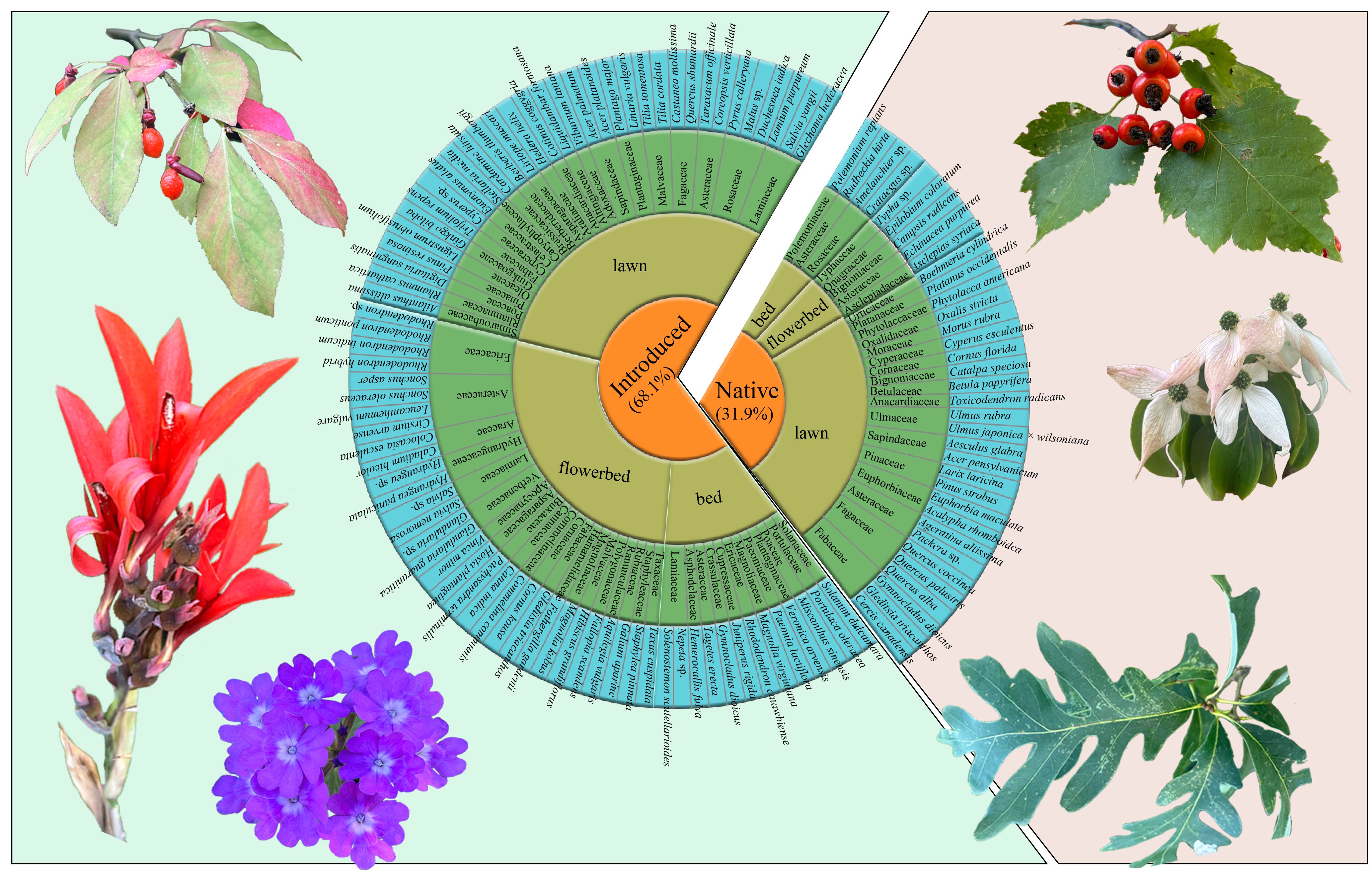
Public green spaces contribute substantially to urban biodiversity, yet they are often dominated by introduced plant species, raising questions about whether this dominance reflects ecological invasion or management-driven selection. We examined the floristic composition, habitat associations, functional traits, and taxonomic structure of vascular plants across managed landscapes on the Youngstown State University (YSU) campus to clarify these mechanisms. Across campus habitats, we recorded 112 species representing 56 plant families, including 77 introduced and 35 native species. Introduced taxa occurred six times more frequently in flowerbeds than native species (31 vs. 5 species) and were also more common in beds (13 vs. 4 species), whereas native species occurred most frequently in lawns (26 native vs. 33 introduced species). Functional composition differed significantly between groups, with native assemblages dominated by trees (~63%) and introduced assemblages were enriched in herbaceous perennials and ornamental shrubs (~61%).
Spectral Signatures of Plant Evolution
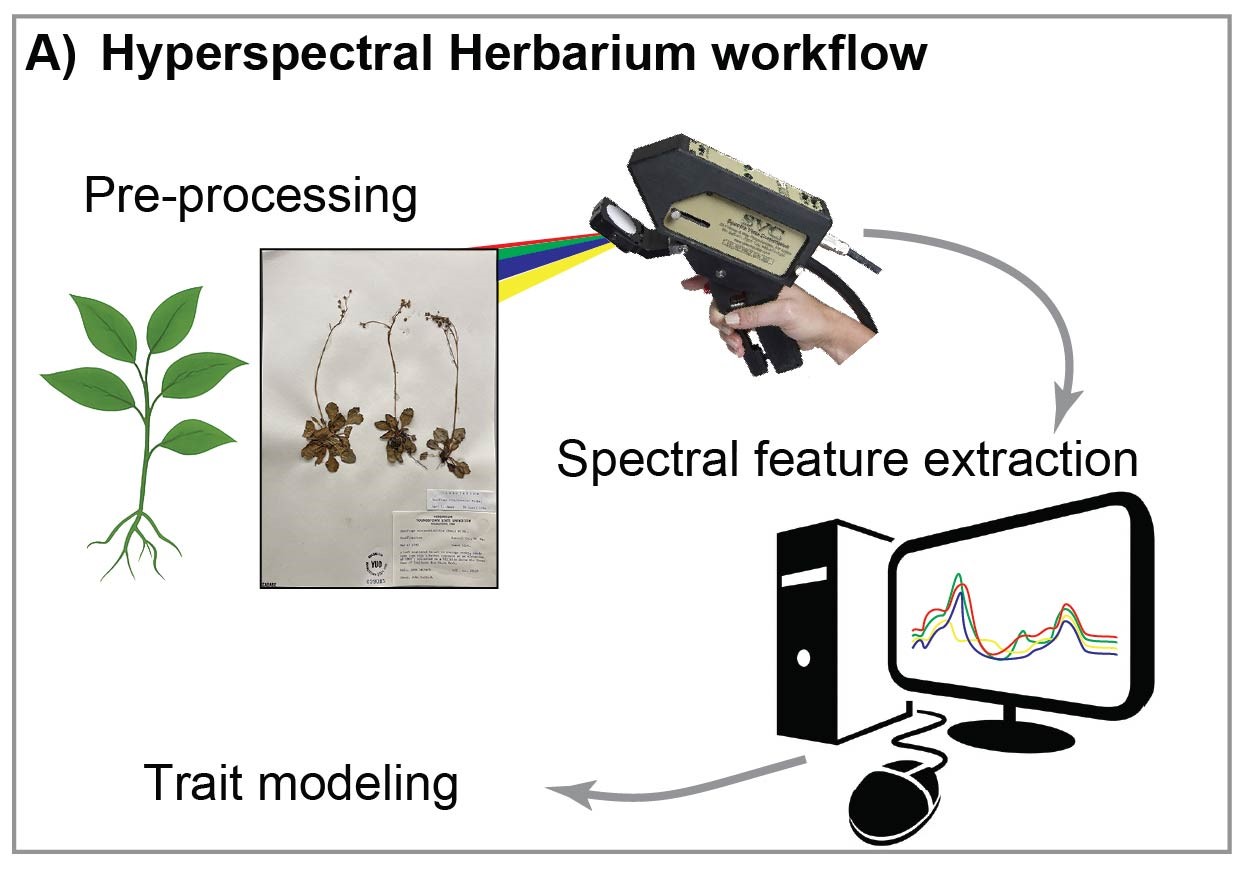
Herbaria contains centuries of preserved plant diversity, yet their biochemical traits remain largely inaccessible because traditional assays require destructive sampling. Hyperspectral imaging (400–2500 nm) provides a non-destructive way to extract pigments, lignin, phenolics, cellulose, and structural traits from dried tissues. This project applies hyperspectral phenomics to build the first evolutionary framework for interpreting optical phenotypes, addressing major gaps in how biochemical strategies evolve, converge, and contribute to ecological resilience. Using 600–1,200 herbarium specimens representing 80–150 U.S. species across major angiosperm clades, we will test four hypotheses: (1) spectral traits exhibit hierarchical structure enabling a phylophenomic topology; (2) distantly related species in similar environments evolve convergent biochemical–optical strategies; (3) spectral functional redundancy predicts ecological resilience; and (4) SWIR absorption features classify chemotypes corresponding to phenolics, alkaloids, and lignin-derived aromatics.
Research Plans
Genomic Seed Zones for Climate-Smart Restoration
We plan to develop genomics-informed seed transfer frameworks to guide restoration under changing climates. By integrating whole-genome sequencing, genotype–environment associations, and genomic offset modeling, we aim to identify adaptive genetic variation across environmental gradients and define genomic seed zones that optimize local adaptation while anticipating future conditions. This work will support assisted gene flow, restoration planning, and climate-resilient ecosystem management.
Functional Genomics of Adaptive Traits
We plan to uncover how genetic variation translates into adaptive phenotypes by studying gene expression, regulatory networks, and multi-omics integration. Using transcriptomics and co-expression network analyses, we aim to identify key pathways underlying stress tolerance, growth, and phenotypic variation. Through collaborative efforts, we will advance toward functional validation of candidate genes, bridging evolutionary genomics with mechanistic biology.
Predictive Genomics for Invasion and Plant Resilience
We plan to develop predictive genomic frameworks to understand and manage biological invasions and environmental adaptation. By integrating population genomics, genotype–environment associations, and machine learning, we aim to identify genomic signatures of invasion success and adaptive potential. This work will enable forecasting of invasion risk and inform strategies for biosecurity, ecosystem resilience, and sustainable plant management.